Clips & Articles: Music
I review the Seattle and Portland operas, and smaller opera companies, for Portland-based Oregon ArtsWatch and Artslandia, and for Classical Voice North America, the official web site of the Music Critics Association of North America, of which I am a member. I write about classical, chamber and jazz music for Oregon ArtsWatch, Classical Voice North America, and previously, for Oregon Music News, concertonet.com and Northwest Reverb. For more stories and music reviews, check the archives at www.columbian.com between 1995-2006. My 2005 National Endowment for the Arts and Columbia Journalism grant helped immensely in music coverage.
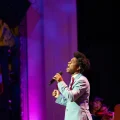
The story of the song: Jimmie Herrod with the Oregon Symphony
The singing phenom joined the orchestra, under the leadership of composer and arranger Jeff Tyzik, for an evening of jazz standards and originals that was part Las Vegas, part Old Hollywood, and part disco.
Originally Published in Oregon ArtsWatch January 2026
Jimmie Herrod’s dazzling concert with the Oregon Symphony this month wasn’t sold out but it should have been. “Divas: Jimmie Herrod Salutes Jazz” Jan. 24 and 25 at the 2,776-seat Arlene Schnitzer Concert Hall starred the 35-year-old Tacoma-born singing phenom. It was thrilling to see him on such a big stage, backed by the orchestra, right at home and right in tune. He’s an original in a natty suit, and some say he has the voice of an angel. Read More
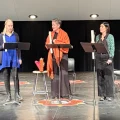
Shimmering voices: Trio Mediæval with guests Caroline Shaw & Danni Lee
The Norwegian-Swedish vocal trio invited the Oregonian duo to join them on their recent Friends of Chamber Music concert in Portland.
Originally Published in Oregon ArtsWatch December 2025
By this time of year, Christmas songs are already stale. “Jolly Old St. Nick” and “Silent Night”(mare) are on repeat in every store and restaurant. Don’t get discouraged. Trio Mediæval relieves any holiday music anguish with their crystal-clear voices. This group, from Norway and Sweden, sings new arrangements of Scandinavian tunes, English carols and German and Northern European folk songs, mostly in an a capella form. Read More
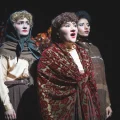
An amazing run: Portland State Opera’s production of “The Eleanors”
Composer/librettist Jodi Goble and co-librettist Michael Ching’s WWII-era opera celebrates the Greatest Generation.
Originally Published in Oregon ArtsWatch December 2025
“Carrying on in public like that? You’re just a bunch of Eleanor Roosevelts!” grumbles a curmudgeonly old guy performed by actor Paul Mortimer, who juggles several small roles. He has just entered Mr. Pete’s soda shop the last year of World War II when he begins carping at the vivacious women gathered around the table sipping their malts and milkshakes. Read More
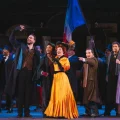
A tragedy crackling with comedy: Portland Opera’s “La Bohème”
PO’s seasonal warhorse production at The Keller, running through November 23, hits all the marks.
Originally Published in Oregon ArtsWatch November 2025
Cara Consilvio, directing her second La Bohème this week since 2017 at Portland Opera, said she is thrilled if an operagoer leaves everyday life behind to travel to the world onstage. In La Bohème’s case, she loves it when audiences can immerse themselves for a couple of hours in Giacomo Puccini’s music, in the entire production. Read More

A sense of fragrance and bloom: Trio Afiori and composer Alex Ho
An interview with the British-Chinese composer — commissioned by the recently formed trio of pianist Gloria Chien, clarinetist Anthony McGill, and mezzo-soprano Fleur Barron — ahead of the trio's upcoming Chamber Music Northwest concert.
Originally Published in Oregon ArtsWatch November 2025
Trio Afiori is new on the music scene pursuing its national breakout “Heritage” tour. If recently formed, the trio packs personality, plenty of experience, and performance credibility. Read More
Local, local, local
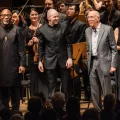
As part of the “Sounds Like Portland” festival, OSO and Grant premiered Schiff’s new piano concerto, Large performed Kurt Weill’s “Seven Deadly Sins,” and the orchestra performed the young composer’s “Ostinato.”
Originally Published in Oregon ArtsWatch November 2025
The Oregon Symphony’s three-week Sounds Like Portland festival in late October and early November brings home the truth: Portland is a hotbed of engaging and eclectic music, but too often the symphony has left its composers and performers out in the rain. Read More
Harpist Brandee Younger
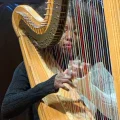
The jazz harpist, hosted once again by PDX Jazz, performed her own compositions and celebrated the music of her predecessors Alice Coltrane and Dorothy Ashby.
Originally Published in Oregon ArtsWatch October 2025
Each time I’ve heard harpist Brandee Younger in Portland since 2016, she glows brighter as a musician and more sure-footed as a performer. Whether playing her beloved fellow harpist the late Alice Coltrane’s tunes or her own compositions, she is an innovative guide of the harp’s journey, history and music. She’s a master player of the huge awkward beautiful instrument. Read More

Tall and visible among turbulent water: OrpheusPDX’s “Scipio’s Dream”
The Portland opera company presented one of Mozart’s youthful – and, until recently, unstaged – operas.
Originally Published in Oregon ArtsWatch August 2025
Even if you’re a Wolfgang Amadeus Mozart junkie, a dedicated opera fan or a musicologist, bets are you haven’t seen or heard Mozart’s Il Sogno di Scipione or Scipio’s Dream. You’ll only occasionally find it listed in the reference books. Read More

A roar of sound: Chamber Music Northwest Top 5 of 2025
Highlights from this year’s summer festival, with a postscript.
Originally Published in Oregon ArtsWatch August 2025
Take this story as my opinion of the best of Portland’s five-week Chamber Music Northwest Festival June 28 through July 27. I missed only a few concerts in the summer feast, including Bach’s Mass in B Minor and one of the New@Night concerts that celebrate living composers’ music. The festival focused on J.S. Bach’s work and influence, but plenty more music was programmed to appreciate. Read More

Contributing to the ecosystem on a broader spectrum: CMNW’s Protégé Project
Now in its fifteenth year, the program nurtures performers and composers already in the midst of their professional careers.
Originally Published in Oregon ArtsWatch August 20125
Handpicked by Chamber Music Northwest’s co-artistic directors Gloria Chien and Soovin Kim, summer-festival protégés have positions that are coveted and celebrated in the music world. CMNW’s 15-year protégé program has helped to launch a number of up-and-coming musicians into real-world fame, present-day friendships – and maybe, fortune. Read More

